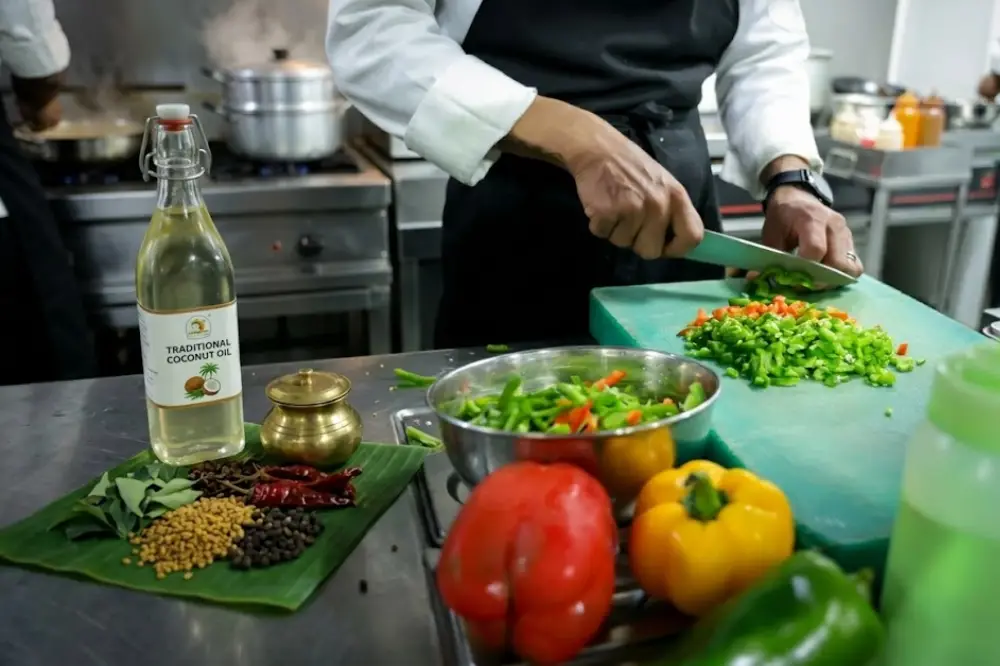
Coconuts grow abundantly in coastal areas of South India, so it naturally makes sense that coconut oil is the primary choice of cooking oil for the local cuisines. Its significance is evident by the fact that almost every dish is prepared using its raw or processed forms. But is coconut oil healthy, though?
Let’s understand more about the soul of traditional South Indian food.
Why Is Coconut Oil Central to South Indian Food?
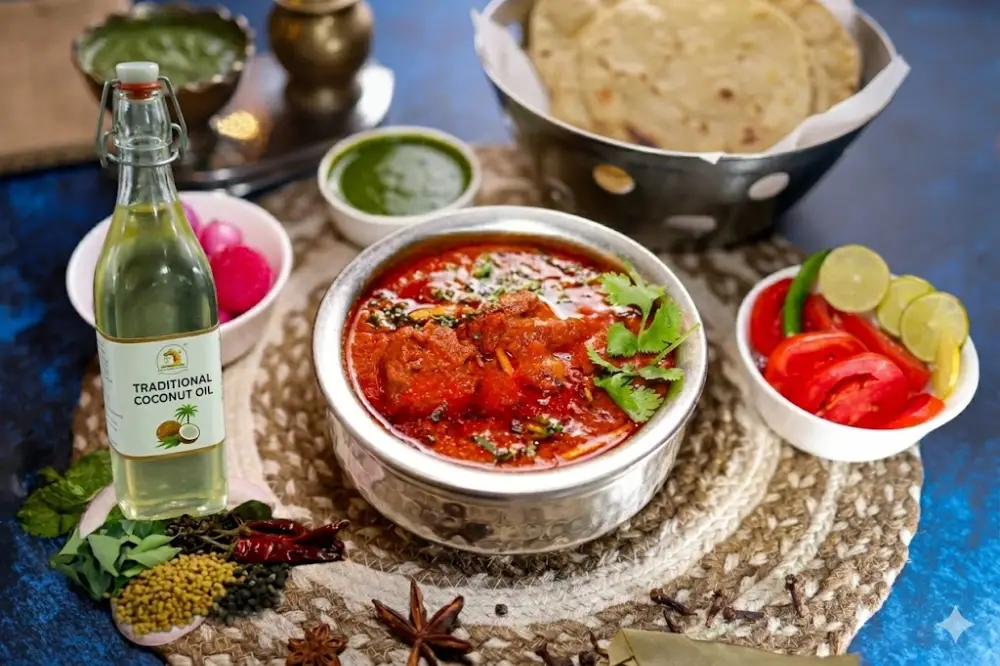
For centuries, the usage of coconut oil has been an integral part of cooking in Kerala, Tamil Nadu, and the coastal parts of Karnataka. South Indian cuisine relies heavily on coconut oil, not just for taste but for its cultural and culinary role.
Our chefs at Swagath restaurant use coconut oil for preparing traditional recipes:
- Coconut oil is high in saturated fats; thus, it remains stable at medium-to-high temperatures and can resist breakdown, making it ideal for sautéing, frying, tempering, and finishing curries and chutneys.
- It adds distinct richness and sweetness to the food that helps to bring out the natural flavours of spices and vegetables.
- Traditional South Indian recipes depend on coconut oil for the authentic Indian cuisine flavour. Learn more about these dishes further in the blog.
- In coastal areas, where coconut trees flourish, people have been using coconut oil as their main cooking oil throughout history.
Its inclusion in meals reflects centuries of cooking heritage, connecting modern diners to authentic Indian cuisine.
So, Is Coconut Oil Healthy?
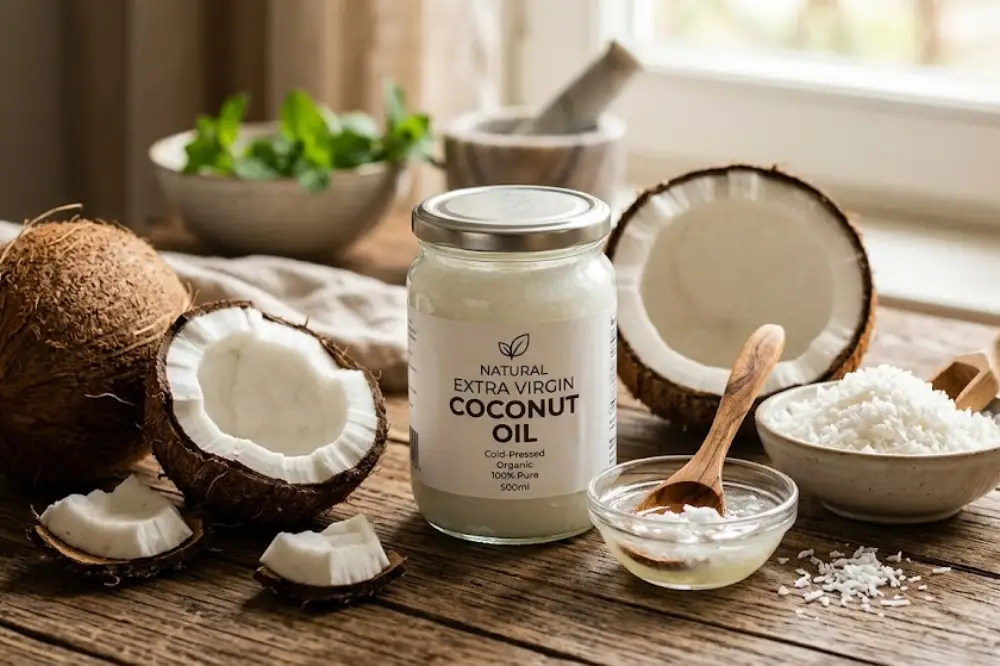
Many people wonder, is coconut oil healthy given that it is high in saturated fat? The answer is both yes and no, depending on how and the type of coconut oil you are using, as well as your whole diet.
Here is what makes it stand out:
It gives you quick energy, not stored as fat
Coconut oil is comprised of medium-chain triglycerides (MCTs), which are a type of fat that your body readily converts to energy and are not stored as fat and is a beneficial source for those needing energy without the extra weight.
It boosts the immune system
It is extremely high in saturated fats (80-92%), with over half of them being lauric acid, which the body transforms into monolaurin. Monolaurin is a potent substance and natural antimicrobial compound known to combat bacteria and viruses.
It is gentle on your digestive system
Coconut oil is easier to digest than most of the refined oils. It can also aid in digestive health due to its antimicrobial agents that counter the effects of bacteria, fungi and parasites.
Aids in blood sugar control
Coconut oil has also been found to be beneficial in aiding insulin secretion and thus in maintaining stable blood glucose. Add it as part of a balanced meal to make dishes like rice, dosa, etc beneficial.
Good for heart health
Although it also elevates the HDL (good cholesterol) that can potentially be beneficial to the heart, the saturated fat present in coconut oil also raises the LDL (bad cholesterol). So, consume in moderation.
Vitamin-rich
It is rich in vitamins E and K that aid in healthy skin, brain health and bone health, respectively.
Antioxidant source
Rich in polyphenols and other antioxidants that protect the body from oxidative stress.
Home cook and dining tips on coconut oil usage
- Always use good quality cold-pressed or virgin coconut oil to preserve the nutrients.
- A little goes a long way; use it by adding a few drops when cooking.
- Do not use in excess; use moderately as per calorie intake requirements.
- Combine with fibre, protein, and other healthy fats to balance your meal.
- Rotate its use with other oils such as sesame and groundnut oils.
- Avoid using it excessively for deep frying every day, especially if you have cholesterol concerns.
To answer this question in a simple way, ‘Is coconut oil good for you?’ As long as you know how to use it properly, it is a healthy option. It is not only about using it as a cooking oil but also about enjoying it as a traditional and nutritious ingredient.
Popular South Indian Dishes Made with Coconut Oil
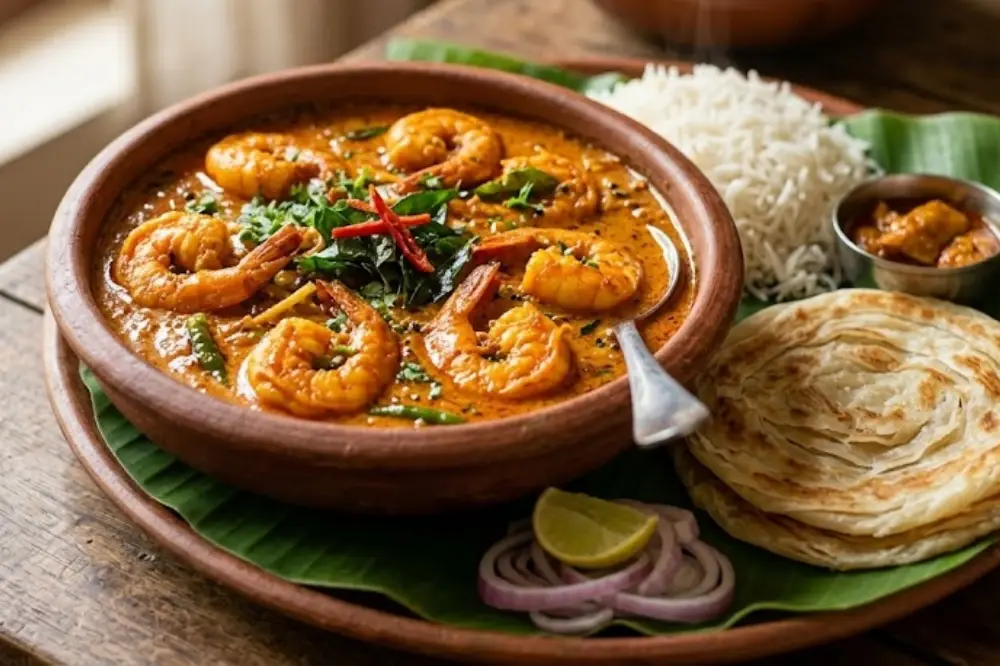
Here’s how it shapes authentic Indian cuisine of the South:
Vegetable Curries
- Avial: A mix of native vegetables in a coarse coconut-yoghurt paste, always finished with raw coconut oil for aroma and richness.
- Olan: Ash gourd and cowpeas simmered in light coconut milk, garnished with curry leaves and coconut oil to elevate flavour.
- Mathanga Erissery: Mildly sweet pumpkin curry topped with coconut shreds fried golden-brown in coconut oil.
- Kalan: Plantain or yam cooked in spiced yoghurt and toasted coconut paste, tempered in coconut oil for authentic taste.
- Theeyal: Deep-brown curry with vegetables in roasted coconut paste, finished with coconut oil for aroma and depth.
- Pulissery / Moru Curry: Spiced buttermilk curry with ripe fruits, tempered with mustard seeds crackled in coconut oil.
Seafood Specialties
- Chemmeen Curry (Prawn Curry): Prawns simmered in coconut milk or rich roasted-coconut paste, all cooked with hot coconut oil.
- Kottayam Meen Curry: Fiery red fish curry with Malabar tamarind, prepared in coconut oil for authentic coastal flavour.
- Meen Moilee: Mild fish curry poached in coconut milk, started and finished with coconut oil for smooth richness.
- Fish Pollichathu: Pearl spot fish coated in spicy masala, wrapped in banana leaf, and shallow-fried in coconut oil.
- Chemmeen Ularthiyathu: Prawns slow-roasted with coconut slices, ginger, and black pepper in coconut oil for deep aroma.
Non Vegetarian Dishes
- Malabar Chicken Curry: Chicken cooked in a spiced onion base, fried in coconut oil, finished with coconut milk for the signature taste.
- Chicken / Beef Ularthiyathu: Meat is pressure-cooked, then slow-roasted with fried coconut slivers and plenty of coconut oil.
- Kerala Egg Roast: Boiled eggs tossed in caramelised onion masala sautéed heavily in coconut oil.
Rice, Flatbreads, and Other
- Thengai Sadam (Coconut Rice): Rice tossed with mustard seeds, dals, cashews, and fresh coconut toasted in hot coconut oil.
- Malabar / Kerala Parotta: Flaky, multi-layered flatbread with coconut oil smeared between layers for crispiness.
- Kerala Vegetable / Chicken Ishtu (Stew): Vegetables or chicken cooked in coconut milk, seasoned with whole spices, and sautéed in coconut oil.
- Neypathiri: Deep-fried rice rotis with coconut and fennel seeds, fried directly in boiling coconut oil.
- Tiffin Chutney Tempering: Coconut chutney and garlic rasam get their signature aroma from a tadka in coconut oil.
Balancing Flavour, Tradition, and Health
Coconut oil is more than just a cooking fat; it’s the heart of South Indian cuisine. It brings original characteristic flavours, an intense aroma and delicate sweetness in authentic Indian cuisine. So if you are thinking, ‘Is coconut oil healthy?’, then when used thoughtfully and in moderation, it is a healthy addition to one’s diet that provides instant energy and also aids in improving digestion.
Each dish prepared at Swagath is done so with an effort to protect this culinary heritage and also offer diners an enjoyable, healthy cuisine.
So, when you enjoy South Indian food, wouldn’t you want to taste it the way tradition intended, with every flavour and benefit intact? If that’s so, come and dine today at your nearest Swagath restaurant.