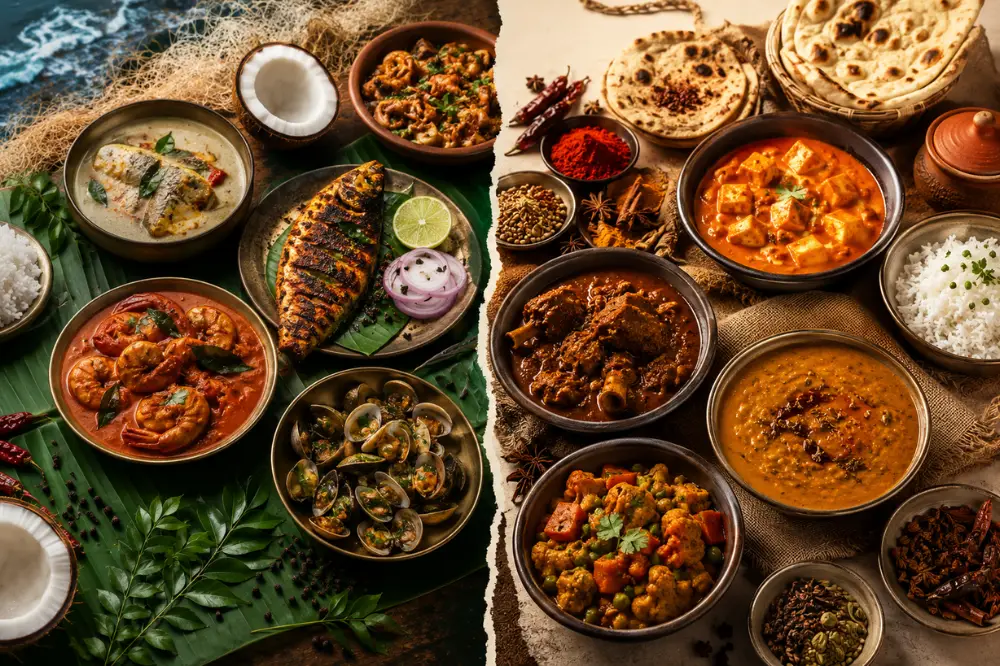
In India, as you move from North to South or vice versa, you will find variations in the food that is served. As you move towards the southern part of India, coastal Indian cuisine is widely available. On the other hand, moving towards the Northern region of India, off-coast regional cooking styles and techniques change. The reason is the different geography, ingredients, and local traditions. Understanding the differences helps you appreciate coastal Indian cuisine and inland flavours.
At Swagath, we observe and celebrate both cooking styles in our menu, giving diners a full picture of India’s culinary diversity.
Let’s explore how coastal seafood dishes contrast with other regional preparations.
Indian food, which is a regional speciality of coastal or near-sea areas of India, falls under coastal Indian cuisine. We can include regions along the Arabian Sea, Bay of Bengal, and the southern coasts like Kerala, Goa, coastal Karnataka, Andhra Pradesh, Odisha, and Bengal.
Coastal food is usually light, tangy, and often spicy, giving coastal seafood its fresh taste. The high humidity in these areas encourages quick cooking and immediate consumption. At Swagath Ambience Mall, we bring this coastal authenticity to urban diners, replicating these flavours in every seafood dish. We keep the seafood fresh and alter the spice levels as per your liking.
Inland cuisine covers regions of India that are away from the sea. This includes parts of North India, central India, and arid interiors.
Inland food is richer, heavier, and less tangy than coastal dishes. Slow-cooked gravies, dum cooking, and tandoor cooking methods are frequent here. While in cities like Gurgaon, you can find top seafood restaurants in Gurgaon that adapt these cooking techniques for urban tastes.
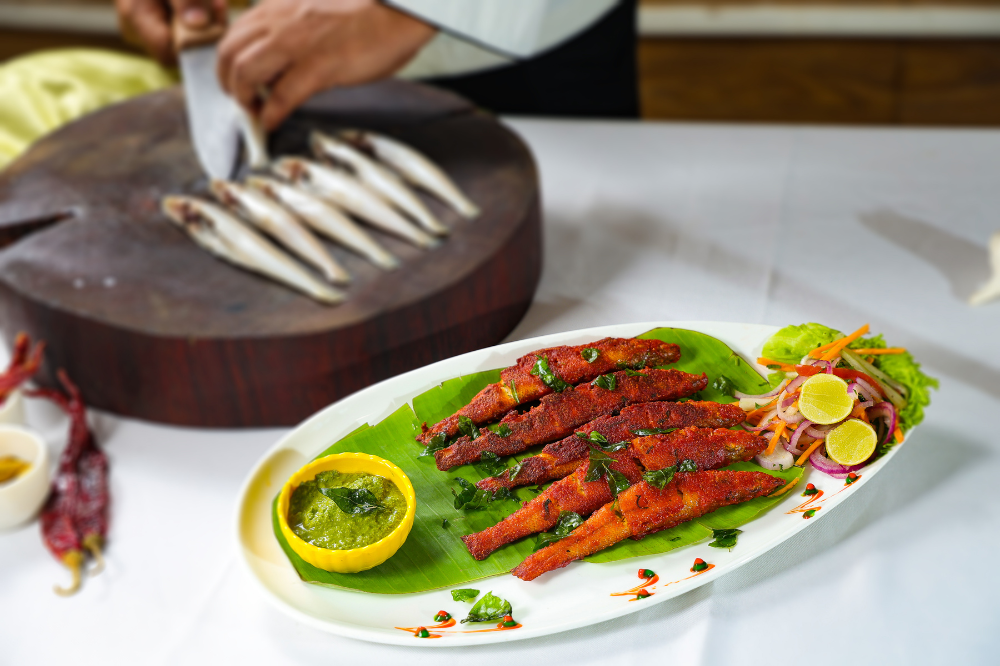
The main differences arise in the ingredients, flavours, spices, cooking techniques, dish structures, and climate role.
Let’s discuss them all one by one:
| Feature | Coastal Indian Cooking Ingredients | Off-coast Indian Cooking Ingredients |
|---|---|---|
| Staple Carbohydrates | Rice is the staple carbohydrate, consumed as whole grains or rice flour and paired with seafood and coconut-based gravies. | Wheat, millets, and sorghum are the primary carbohydrates, commonly prepared as flatbreads, while rice is consumed as a secondary option. |
| Main Protein Sources | Fresh seafood such as prawns, crabs, mackerel, pomfret, mussels, clams, and squid are major protein sources, along with gourds, raw bananas, and jackfruit for vegetarian diets. | Lentils, paneer, and farm vegetables are common vegetarian proteins, while eggs, mutton, and chicken are preferred non-vegetarian protein sources. |
| Cooking Oils | Coconut oil, groundnut oil, and local fats are commonly used for cooking. | Ghee, butter, mustard oil, and sesame oil are widely used in cooking. |
| Souring Agents | Fruit-based souring agents such as tamarind, kokum, lime juice, and raw mango are commonly used. | Yoghurt, amchoor (dried mango powder), tomato, and lemon are commonly used to provide mild sourness. |
| Curry Thickening Ingredients | Fresh coconut in grated, paste, or milk form and poppy seeds are used to thicken curries. | Slow-cooked onions, cashew paste, melon seeds, and pureed lentils are commonly used for thick curry bases. |
Coastal Indian cuisine is tangy, spicy, and fresh-tasting. Coconut, tamarind, and vinegar dominate. Heat often comes from fresh green chillies or dried red chillies.
On the other hand, other regions of India have cuisine that is warmer, creamier, and richer. Yoghurt, cream, and ghee are used to balance spices. Dishes are slow-cooked and sometimes earthy, especially in arid interiors.
The contrast is striking when comparing a Goan fish curry with a North Indian mutton curry. Coastal dishes feel light yet bold, while other dishes feel hearty and comforting.
The main difference between Indian spices is how they complement the main ingredients. Coastal spices are selected mainly due to their ability to balance out the oiliness of fresh seafood. While the off-coast spices build a deeper, more warming heat in heavier meat, dairy, and lentil dishes.
| Spice / Aromatic Type | Coastal Cuisine | Other Regional Cuisine |
|---|---|---|
| Primary Herb | Curry leaves are widely used for their deep citrusy aroma and fresh flavour. | Fenugreek and coriander are commonly used as primary herbs for flavour enhancement. |
| Source of Heat | Black pepper and fresh green chillies provide heat and sharp spice notes. | Red chilli powder and garam masala are the main sources of heat and warmth. |
| Signature Spices | Mustard seeds, black pepper, tirphal (teppal), fennel seeds, and fenugreek seeds are commonly used. | Cinnamon, cloves, black cardamom, cumin, mace, nutmeg, and asafoetida are signature spices. |
| Spice Blends | Fresh raw ground spice pastes mixed with coconut are commonly prepared. | Roasted dry spice powders such as garam masala are commonly used. |
Additionally, in coastal Indian cuisine, the emphasis is on light, fresh, and aromatic flavours. Other parts of Indian cooking build flavour gradually, resulting in thick, layered gravies.
The core difference in both cooking techniques is the approach to moisture. Coastal cooking techniques include steaming, wrapping, and gentle heat to preserve the delicate texture of fresh fish.
Other Indian cooking techniques rely on intense fire, heavy searing, and slow reduction cooking to break down meat, lentils, and dairy products.
| Technique Category | Coastal Cuisine | Regional Cuisine |
|---|---|---|
| Primary Searing Method | Light pan-frying on a tawa is commonly used to preserve delicate textures and fresh flavours. | Heavy oil-separation searing or bhunao is used to deepen flavour and create rich gravies. |
| Moisture Control | Moisture is retained through steaming techniques such as bhapa cooking. | Moisture is reduced through slow-simmering methods like mand for thicker consistency. |
| Oven Cooking | Leaf-wrapped baking is commonly practised to lock in aroma and moisture. | Clay oven roasting or tandoori cooking is widely used for smoky and charred flavours. |
| Smoking Method | Sun-drying and beach smoking techniques are traditionally used for preservation and flavour. | Active charcoal smoking or dhungar is used to infuse dishes with smoky aroma. |
These methods affect the texture, aroma, and flavour of the dishes that make them distinct. It is quite common for urban seafood restaurants in Gurgaon to use these techniques to suit diverse palates.
There is a big difference in the basic structure of the meals consumed in different regions of India. Off-shore Indian meals are centred around heavy, dry flatbreads that are designed to scoop up thick, rich gravies. On the other hand, the coastal meal structure revolves around a large mound of light rice that helps soak in the thin, sour coastal curries.
Here is how a typical meal structure looks in both kinds:
Coastal meals:
Other meals:
Wish to enjoy an authentic plating in Gurgaon? Visit Swagath Ambience Mall, where we design plates that perfectly balance coastal freshness and inland richness.
Coastal areas are humid and warm. Seafood is prepared fresh and consumed straightaway. Curries, using moisture and coconuts, are more suitable for this kind of environment.
Other parts of India are colder or drier. The food that is prepared uses shelf-stable ingredients such as lentils, cereals, and dairy products. Gravies become thick and dense, preserving them longer.
Here’s how environmental factors have made an impact on the food science and cooking style of each region:
| Environmental Factor | Coastal Adaptation | Other Regions Adaptation |
|---|---|---|
| Primary Climate Challenge | Coastal regions face high humidity and heavy monsoons, which accelerate bacterial growth and seafood spoilage, leading to the development of strong food preservation methods. | Other regions experience arid heat, harsh winters, and water scarcity, influencing efficient cooking and long-term food preservation practices. |
| Main Preservation Method | Heavy salting, sun-drying seafood, and acidic marinades are commonly used for preservation. | Food preservation relies on clarified fats like ghee and sun-drying vegetables or pods such as amchur. |
| Cooking Method Goal | Cooking methods focus on retaining moisture and preserving delicate textures through steaming and wrapping techniques. | Cooking methods aim to reduce moisture through heavy searing (bhunao) and slow reduction techniques. |
| Perishability Management | Fresh seafood and perishable ingredients like coconut milk are extracted and consumed quickly to avoid spoilage. | Milk is fermented into shelf-stable products such as yoghurt, ghee, and paneer for longer storage. |
These create distinct textures and flavours for coastal seafood and other regional dishes, showing how geography plays a role in cooking styles.
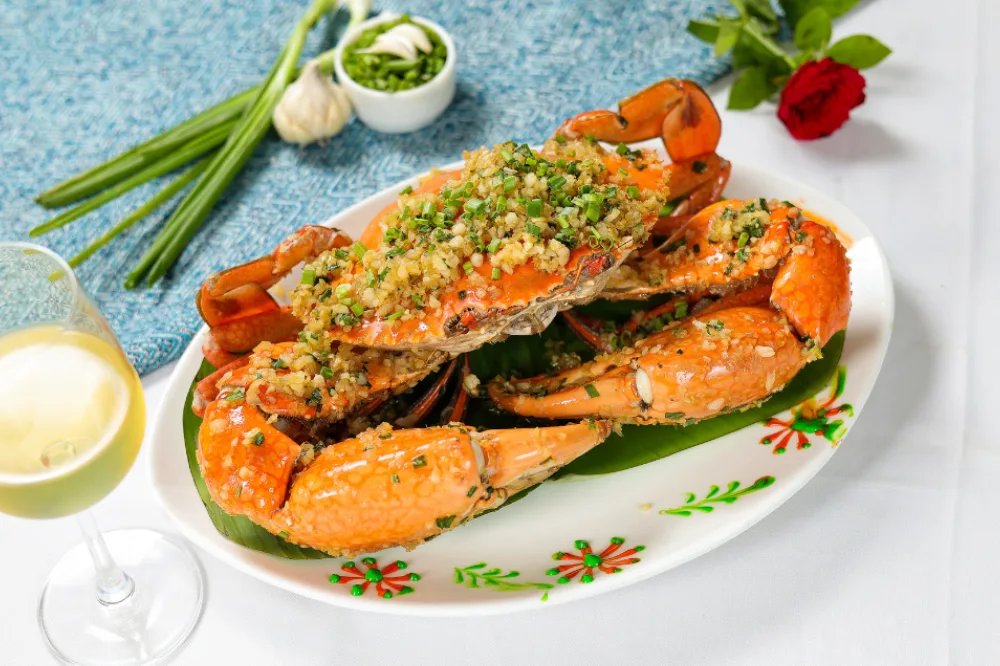
At Swagath Ambience Mall, we celebrate the diversity of Indian cuisine by offering both coastal Indian cuisine and rich inland specialities. Our menu brings authentic flavours to urban diners, making every dish a journey through India’s culinary regions.
Our coastal offerings showcase fresh coastal seafood and traditional South Indian flavours:
These dishes reflect the signature tangy, spicy, and aromatic profile of coastal Indian cuisine and are among the favourites at our seafood restaurants in Gurgaon.
At Swagath Restaurant, we ensure every plate maintains authenticity, freshness, and the perfect balance of spices. Guests looking for authentic seafood restaurants in Ambience Mall can visit us to savour the depth of coastal Indian cuisine alongside hearty Northern classics.
Different cooking styles represent the diversity of India. Indian coastal food comprises seafood and rice along with a spicy flavour. Northern and central Indian cuisines are based on cereals and pulses as well as dairy products, creating rich, hearty meals.
At Swagath Restaurant, we bring all cooking styles to one place, thereby allowing guests to try out authentic coastal Indian cuisine as well as other traditional dishes. The difference between the cuisines can be easily noticed through our food menu.
