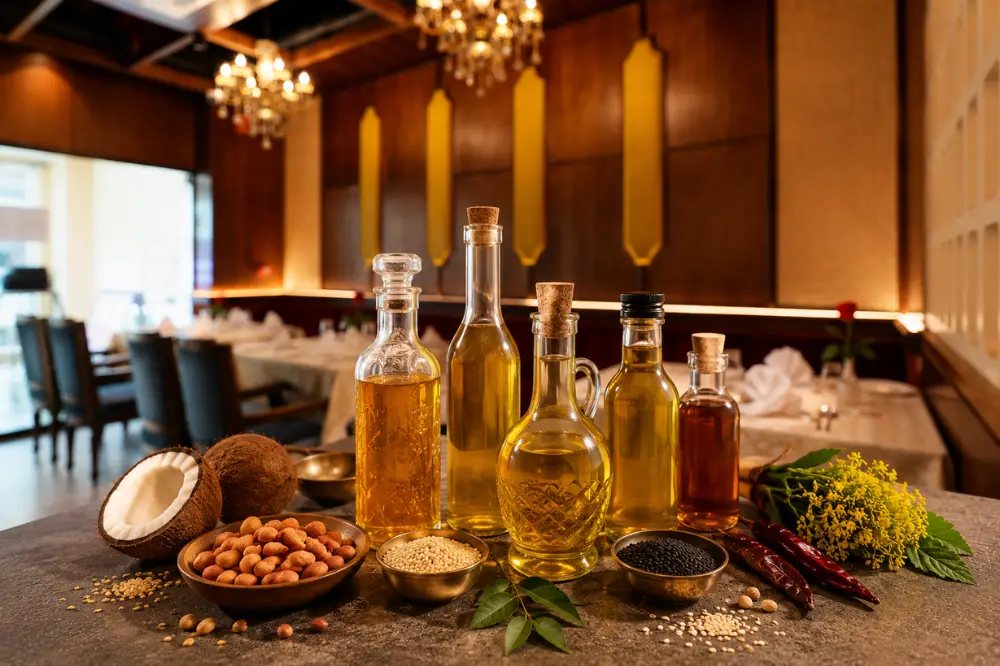
In terms of authentic Indian cuisine, the secret of good taste is always contained in those few ingredients that make the whole dish unique. Among these, an ingredient that can be regarded as an important factor in achieving the richness and diversity of Indian food includes the traditional cooking oils in authentic Indian cuisine. These oils are the heart and soul of Indian dishes.
We at Swagath Ambience Mall know how important it is to use the right cooking oils in order to ensure not only perfect taste but also the authenticity of Indian dishes. Such oils allow us not only to cook but also to respect the culture and traditions of a certain region of India, as well as to highlight its food characteristics. But what makes these oils unique? How do they affect the taste of our dishes?
Let’s dive into the role of these oils in bringing authentic Indian cuisine to life.
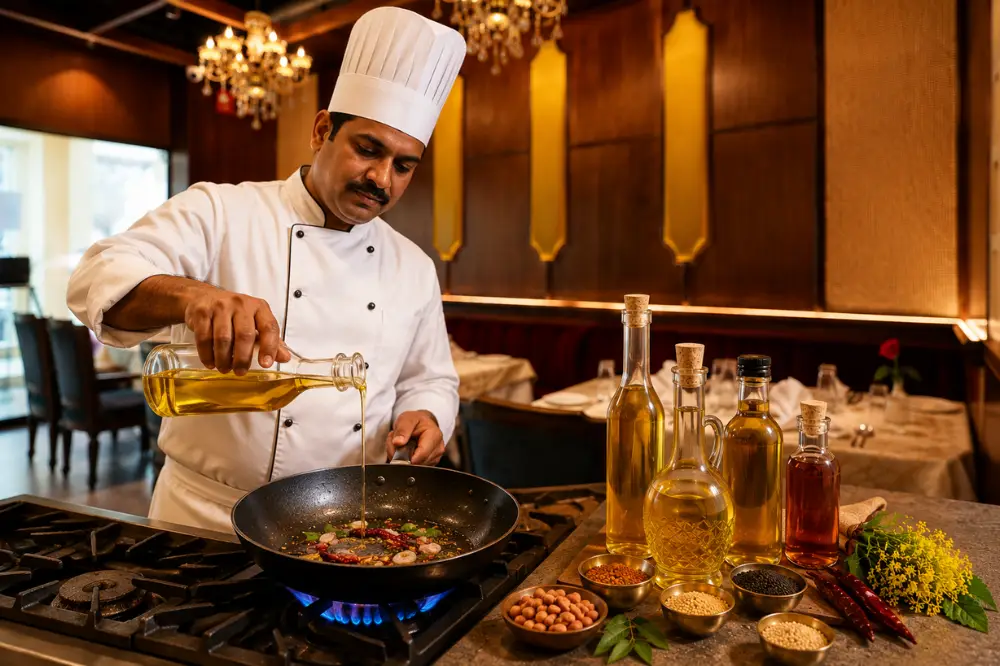
Oil is an essential component for making the most of the potential of Indian cuisine. It facilitates the release of the aroma of ingredients such as mustard seeds, cumin, curry leaves, and chilli, usually tempered in hot oil or ghee at the beginning of the cooking process. These processes add layers of taste and flavour characteristic of Indian cuisine.
The selection of oil has an impact on the texture of the dish as well. From the crispy outside texture of pakoras to the lightness of puris to the perfect crisp of dosas, all these are possible with the use of oil in the process of preparing food. As for Swagath Ambience Mall, we believe in using only the finest traditional cooking oils in order to make our cuisine really delicious.
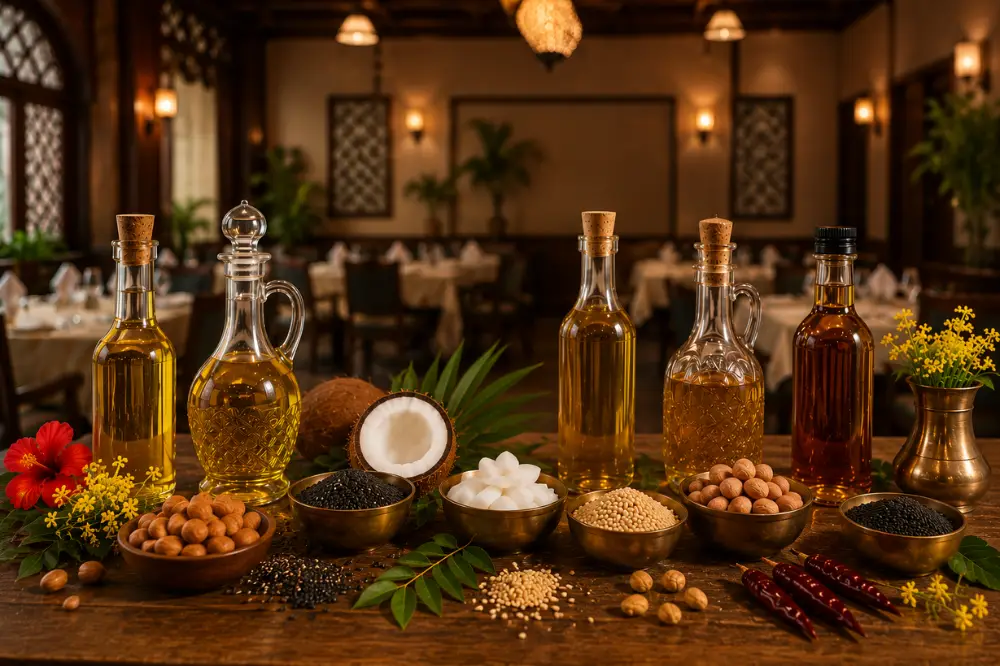
India’s diverse culinary traditions have a direct correlation to the kinds of oils used in its cuisine. Based on the weather, availability of crops, and cooking techniques, different parts of the country preferred certain oils over others. As an authentic Indian restaurant in Ambience Mall, we honour these distinctions by adding the appropriate oils to our recipes so as to make genuine dishes representing India’s rich food culture.
Mustard oil is common in the cooking cultures of Northern and Eastern India, specifically in the cuisines of Bengal, Punjab, and Odisha, among others. The spicy taste of mustard oil makes it very suitable for tempering dishes such as saag, pickles, and tadkas. Mustard oil can also be used in high-temperature cooking methods like frying, as it maintains its stability and flavour even at elevated temperatures.
For instance, mustard oil is an important part of Bengali fish curry because it adds bold flavours that make the fish taste sharper and balance out the tangy parts of the dish.
Sesame oil holds a special place in South Indian food culture because of its distinctive nutty taste and finds application in dishes such as idli podi, poriyal, and sambar. The strong, earthy scent that comes from sesame oil gives the food items a unique flavour reminiscent of Tamil Nadu and Kerala.
Here at Swagath Restaurant, we use sesame oil to bring out the authentic flavours in our South Indian dishes. It helps create an immersive experience that stays true to the region’s culinary traditions.
Groundnut oil, popularly called peanut oil, is a very common ingredient in Western and Southern Indian cuisines because of its flavourless and high smoke point characteristics. Groundnut oil is a versatile cooking oil and may be used for shallow frying, sautéing, or seasoning. In Maharashtrian and Karnataka cuisine, the use of groundnut oil for preparing seafood and vegetable dishes ensures that the dish remains crisp without tasting oily.
Groundnut oil is generously used in our coastal seafood preparations to enhance the flavours of the seafood without making the dish taste of too much oil.
Ghee, or clarified butter, is synonymous with Indian cooking and is often used in festive preparations, everyday cuisine, and even desserts. The ghee adds a rich, nutty flavour to the food and is renowned for its health benefits in Ayurvedic cuisine. It is also utilised for tempering and garnishing, giving the dal, biryani, and curries an extra layer of luxury.
At Swagath Restaurant, we finish most of our signature dishes with a drizzle of ghee, making each dish a pleasure to savour.
In the culinary preparation of dishes in India, oil plays an essential role. It not only serves as a medium for cooking but also forms the basis for flavouring the food. The selection of oil plays a very important role and determines the flavour, aroma, and taste of the dishes cooked. play a crucial role in maintaining the regional flavours of the dish.
Swagath Ambience Mall always follows traditional Indian culinary practices and ensures that all the oils used at our restaurant maintain the true flavours of Indian cuisine. For those seeking a restaurant in Ambience Mall that understands the importance of authenticity and flavour, we are the perfect destination.
